A Programme for a Long Evening by the Water
A programme for a long evening by the water can make varied pieces feel connected, using contrast, pauses and a clear arc to guide the audience.
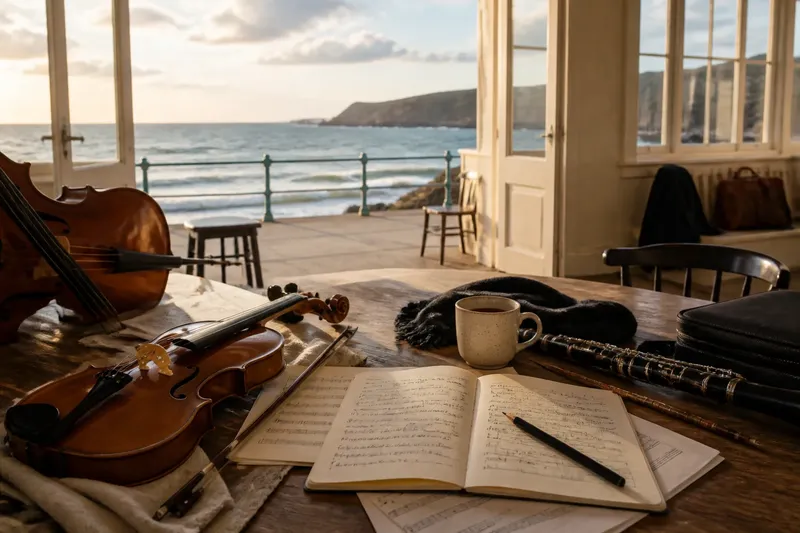
The tide is turning outside the pavilion, the doors are open, and the draft programme has three lively pieces in a row before a long, quiet work. A programme for a long evening by the water needs more than a sequence of strong performances: it needs an audible shape, with changes of mood that help listeners stay attentive without making the concert feel engineered.
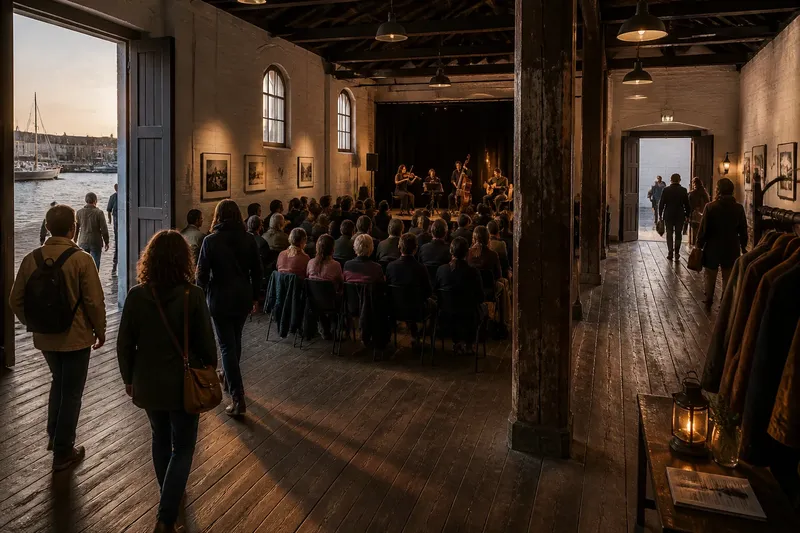
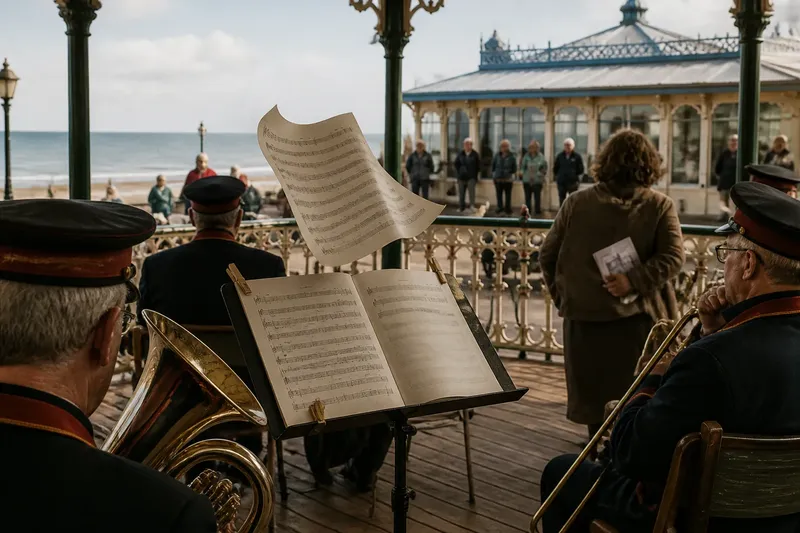
Imagine a clearly hypothetical situation: a chamber ensemble is preparing an evening at a coastal pavilion. Its set includes a bright opening, a slow work, a folk-inspired piece, a substantial final composition and a short encore. The players want variety, while the audience may arrive carrying beach-day energy, damp coats or the after-effects of a journey. The programme can account for that by treating order and pauses as part of the experience.
What should the audience feel as the evening unfolds?
Before moving pieces around, the ensemble writes a plain-language description of the intended arc: welcome, settle, surprise, rest, gather momentum, release. These are not instructions for how anyone must feel. They are a way to check that adjacent works do not all ask for the same kind of attention.
The opening should give listeners a clear point of entry. A short, rhythmically direct work can establish the ensemble’s sound and invite the room to listen. That does not mean every concert needs a brisk opener; a reflective start can work too, provided the following piece develops the atmosphere rather than simply prolonging it.
For this imagined programme, the bright opening remains first. The folk-inspired piece moves later, and the substantial final composition is held back until the audience has had a genuine pause. That change gives the evening a gradual build instead of spending its most varied colours before the interval.
How can contrast connect different pieces?
Contrast works best when it creates a relationship, not just a change of style. Consider tempo, texture, scale, instrumentation and emotional weight. A dense, forceful work followed by a spare, quiet one can sharpen the character of both; two works with very different tempos may still feel repetitive if they share the same texture and intensity.
For the pavilion programme, the ensemble lays the pieces out on paper and notes what each one asks from the listener. The opening is bright and compact. The slow work is inward and sustained. The folk-inspired piece has a dance pulse and a more conversational character. The final composition is broad and demanding. This quick map reveals that placing the slow work directly after the opening would make the first part of the concert retreat too soon.
Instead, the folk-inspired piece follows the opening. Its pulse keeps the welcome lively, while its distinct style changes the colour of the programme. The slower work comes after that, giving the first half somewhere to settle before the interval. The contrast is audible, but the sequence still feels deliberate because each shift has a role.
Where should the pauses go?
A pause is not empty time. It gives listeners a chance to reset, and it gives performers room to regroup. In a seaside venue, it may also be the moment when people step outside, find a drink or check whether a coat is needed. The printed programme should make clear when the break falls and when the music resumes.
In the imagined case, the interval comes after the slow work rather than splitting two closely related pieces. That makes a natural boundary: the first half moves from welcome through energy to reflection, while the second half can begin with a fresh character. The ensemble avoids placing the longest or most complex composition immediately before the break, when listeners may be watching the clock.
The players also consider whether a brief pause between two works is enough, or whether the next piece needs a spoken introduction or a longer reset. A pause should match the practical demands of the performance, not serve as decoration. If the venue has a fixed schedule or access arrangements, the organiser should confirm those details with the venue team.
How can the second half regain attention?
After an interval, a quiet opening can help the room settle, but it should not feel like the concert has restarted from scratch. In this scenario, the second half begins with a short, clear work that offers a fresh sound while retaining a thread from the first half, such as a related rhythm, instrument or atmosphere.
Then the substantial final composition arrives with enough space around it to register as the evening’s destination. The encore stays short and light, offering release rather than competing with the ending. If the main work already finishes decisively, the ensemble can also choose not to add an encore; a programme does not need a final extra piece simply because one is customary.
There is a practical test for the sequence: read the titles and timings aloud, then describe the transition between each pair in one sentence. If the explanation is always “it is a different mood”, the contrast may be arbitrary. A stronger account might be that the dance-like piece opens the room up before the slower work narrows the focus, or that a compact post-interval work prepares the ear for a larger final texture.
What should listeners know before they arrive?
Should the programme print descriptions of every piece?
Not necessarily. A concise note about the evening’s shape can orient listeners without telling them what to think. Add background only where it helps someone hear a meaningful connection, and keep the wording readable in a dim room.
Is a long interval always helpful?
No. The right break depends on the concert’s duration, venue arrangements and audience needs. A pause should be long enough to serve its purpose without making the second half feel disconnected.
How can unfamiliar music fit a varied programme?
Place it where listeners have enough attention to meet it, and give a brief, specific cue if one would help. A note about a recurring rhythm or an unusual instrument can offer an entry point without reducing the piece to a plot summary.
Should the setting determine the order?
The shoreline can inform the mood of a programme, but it need not dictate every choice. Use the venue as one consideration among the music, performers and audience, rather than forcing a coastal theme onto unrelated works.
What does the finished sequence look like?
The hypothetical ensemble settles on this order: bright opening, folk-inspired work, slow work, interval, compact second-half opener, substantial final composition, and an optional short encore. The result is not a formula for every seaside concert. It gives this particular evening a recognisable movement from welcome to immersion and then release.
Before printing, the organiser checks the running order with the performers and venue, including any practical changeovers and the announced return time. The programme for a long evening by the water is strongest when its shape can be felt in the music and understood in the room, while leaving listeners free to experience the shoreline and the performance in their own way.