Why a Harbour Hall Changes the Shape of a Concert
A harbour hall changes the shape of a concert through its entrances, sightlines and layout, helping you choose where to gather and how to follow the performance.
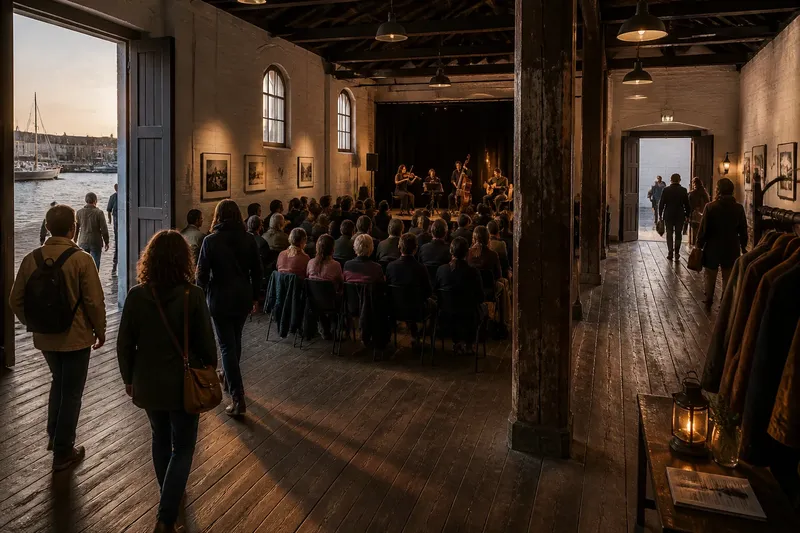
At a harbour hall, one group may arrive from a quay while another comes through a narrow landward doorway. They meet inside at different angles, and the room begins shaping the concert before the first note. A harbour hall changes the shape of a concert through its entrances, sightlines and layout: these determine how people gather, where attention settles and how easily the performance reaches each part of the audience.
How does the entrance shape the gathering?
An entrance is not merely a passage from outdoors to indoors. Its position gives people their first impression of the room and influences where they pause, look for companions or move next. A door facing the stage offers an immediate visual cue; a side entrance asks newcomers to orient themselves after stepping inside.
Harbour buildings often have more than one approach: a quay-side door, a street entrance or a passage through a shared building. When arrivals enter from different sides, the audience may spread across the room rather than form one queue or cluster. That can make a hall feel sociable, but it also means people may be facing away from the performance area while settling in.
The route from door to seat matters, too. A direct aisle gives late arrivals a clear path without crossing the main gathering area. A route that winds around chairs or passes in front of the performers can interrupt both conversation and attention, even before the event begins.
For organisers, the useful question is where people naturally stop. A poster, ticket desk or coat rail placed beside a narrow doorway can create a bottleneck; moving that activity towards a wider wall may leave the entrance open. For an audience member, a quick glance at the room’s routes can reveal whether the best place to wait is near the door, along a side wall or farther inside.
What do sightlines tell you about where to sit?
A sightline is the unobstructed view from one place in the room to the performance area. Harbour halls vary from broad, simple rectangles to rooms with piers, galleries, raised edges or old structural posts. Each feature changes what a seated or standing listener can see, and what other people may block.
Think beyond whether the stage is visible. A singer’s face, a musician’s hands and the signals exchanged among performers can all help an audience follow a piece. A seat that looks straight towards the front may still hide these details behind a column, a speaker or someone standing in the aisle.
The stage itself can also sit off-centre. In a hall originally used for storage, meetings or maritime work, the most practical performance area may be at one end or along a side wall. The audience then gathers around a layout made for another purpose, creating different distances and angles rather than a single front-facing view.
Before choosing a place, check the room from the entrance and from the side. Look for posts, doorways that may remain in use, and places where people are likely to stand. If seating is unassigned, arrive early enough to compare a clear view with a comfortable route in and out; the nearest seat is not necessarily the one that best supports attention.
Why does the room’s layout affect how people listen?
Layout gives the audience a quiet set of instructions. Rows suggest that everyone should face one direction; a loose semicircle invites people to watch one another as well as the performers. Small clusters around a central playing area can make a concert feel shared, while a long narrow arrangement may leave listeners at the far end feeling more like observers.
Distance changes the sense of participation. Those near the performance may catch gestures and expressions, while those farther back may rely on the overall shape of the music and the movement of the room. Neither position is automatically better, but a layout that leaves a large gap between performers and listeners can make the event feel less connected.
Movement is part of the arrangement. People may need to reach a door, find a seat, or pass a companion without disrupting others. Clear side routes let the main audience settle; if every path cuts across the centre, late arrivals and brief departures draw attention away from the performance.
Imagine a fictional harbour hall with a stage at one short end, a post blocking part of the back row and a side door used throughout the evening. The organiser could leave a clear strip beside that door and angle the rear chairs slightly towards the stage. The expected observable result is a more open route for arrivals and fewer seats looking directly behind the post, without changing the music or the room itself.
How can you read a harbour hall before the music starts?
Take a moment to notice how the room works before choosing where to stand or sit. This is not a technical inspection; it is a practical way to understand how you will see the performers and move around other people.
- Find every entrance. Notice which doors people are using and whether one route passes close to the performance area.
- Trace the clear paths. Look for aisles and open edges that allow people to move without crossing the middle of the audience.
- Check for visual obstructions. Identify posts, pillars, balcony edges, hanging equipment and spots where standing listeners may block a seated view.
- Locate the performance focus. Confirm where the performers are placed, especially if the arrangement is not a conventional stage at the front.
- Compare near and far positions. Decide whether seeing gestures, having room around you or keeping an easy route to the door matters most for this concert.
- Notice where people gather. A ticket desk, coat rail or sign can draw a crowd; avoid choosing a spot that doubles as a waiting area.
These checks are useful even when the room has been set out for the event. A small change in chair angle or a clear path may improve the experience, but audiences should use the routes and seating the venue provides rather than shifting furniture themselves.
What do listeners often ask about harbour hall seating?
Is the seat nearest the stage always the best?
No. A close seat may offer a vivid view of performers but a limited view of the group as a whole, or an awkward angle if the stage sits to one side. Choose according to what you want to follow and whether the view stays clear.
Where should I sit if a post blocks the room?
Try to position yourself so the post does not fall between you and the main performance area. Looking from the entrance or down a side aisle can help you compare angles before settling; avoid blocking an aisle while you decide.
Does a side entrance make a concert feel less focused?
Not by itself. A side door can help people arrive without crossing the centre, though a busy route beside the performers may draw the eye. The effect depends on whether movement remains at the edges or repeatedly cuts across the room.
Should I stand at the back to keep an easy exit?
The back can offer a convenient route, but it may also be the place where people pass through or gather. Check the venue’s arrangement and choose a position that keeps access clear without turning you into an obstacle for others.
When does the room become part of the performance?
Once the music begins, the arrangement keeps working. A shared view helps listeners follow changes in the performers’ attention; a clear edge route lets people move without dividing the audience. Entrances, sightlines and layout do not replace the music, but they shape the conditions in which people hear and watch it.
That is the particular character of a harbour hall: the room carries traces of how people reach it and how its space is organised. Before taking a seat, notice where the audience is arriving from and which paths remain open. That small act can help you find a place where the concert feels connected, rather than simply close.